Sunday, April 6, 2008

The Road to Cana

As a fan of Anne Rice horror novels I did not know quite what to think of her writing a series a novels on Jesus. I was quite happy to hear of her return to the Catholic faith, but was rather skeptical as to what these novels would be like. I received Christ the Lord: Christ the Lord: The Road to Cana for review so I was finally able to indulge my curiosity. When someone decides to write a novel of Jesus from a first person perspective either they are pretty prideful to do so or have some measure of humility in undertaking the task. I believe the latter to be true in this case.

The novel doesn't start off that well with the stoning of two adolescent boys for alleged homosexuality and I thought that perhaps this novel would be more about ideology than trying to plumb the depth of the incarnation.

Tom at Disputations ably noted my second concern about the novel.

"And I may have rolled my eyes as Jesus moons over the beautiful young girl who lives across the street. (Not to worry, though; Rice's Jesus knows that the personal problems of a Messiah don't amount to a hill of beans in this crazy world.)"

The main thing you might wonder about a first person perspective of Jesus of how the author would handle Jesus being fully man and fully God. The first half of the novel mainly concentrates on Jesus' humanity while not discounting his divinity. It is not the "ignorant Jesus" portrayal that is such a common theological fad and the novel has Jesus being aware of his mission to a degree and at times calls in this knowledge.

The novel has Joseph as having been previously married and that the Apostle James is a step-brother and has him living to just before his public ministry. This idea comes from the Protoevangelium of James and I believe she also used some of this apocryphal Gospel in her first book on Jesus. This though is a perfectly acceptable and orthodox understanding concerning Joseph and the brethren of the Lord. Regardless she uses it to good effect. I found quite interesting the question she brings up in how the villagers might have seen Jesus who would have been somewhat of an oddity having never married. She references the Annunciation, the miracle of Jesus' birth, the angels proclaiming his birth, and the Magnificat in the text and I enjoyed the way it was incorporated and not cast into question in any way.

The problem with so many writers is that they can only see through the lens of their time. That they have to layer on modern attitudes onto people who lived in more ancient times. The movie The Nativity Story demonstrated this problem by having a Mary displaying teenage angst and at first not accepting Joseph as chosen for her husband. Anne Rice though was able to write of the people in Jesus's village in what seemed to me to be in an authentic way. Their concerns and worries were the concerns and worries of the time. The characters are nicely fleshed out and quite believable.

The first half of the novel dwells in the period of time just before Jesus' public life and the end of his hidden life. The plot for this first half is somewhat interesting, but it is when Jesus's cousin John the Baptist appears on the world stage that we come to firmer ground. It is this second half that I found quite enjoyable to read and loaded with many insights into his public ministry. Her description of meeting his cousin and being baptized and then going into the desert verge on a meditation of these events. Especially the temptation in the desert is a very imaginative description of the events and I think some of the best writing in the book. The Gospels has the calling of the Apostles compacted in time and the book treats their calling in the same way. Very rapidly we meet the Apostles and they come to join and follow Jesus and we see them at the wedding of Cana. The description of the events at Cana are also quite stirring and I found the interaction between Jesus and his mother Mary brought tears to my eyes and will help me when praying the Luminous Mysteries.

I had a couple of minor qualms of the first half of the novel which I mentioned at the beginning of the review, but I found the book to be totally worthwhile and really quite an amazing effort. There is no deconstruction of Jesus and the novel is quite orthodox and a very fruitful meditation on Jesus by Anne Rice. It really makes me look forward to the next novel in the series and I will be going back to read the first one. The best thing I can say about "The Road to Cana" is that it will be one I will put on my reread list.

Catholic Media Review mentioned on book cover

I was at Kent Gilges' book signing for "A Grace Given" last night, when I received one of the biggest thrills of my life. On the back cover of the book, there are blurbs from the reviews of his book. The reviewers are quite impressive: George Weigel, Senior Distinguished Fellow at the Ethics and Public Policy Center and papal biographer, Don Wildmon, President of the American Family Association, and then. . .
Leticia Velasquez of Catholic Media Review!
Read the blurbs here.
I am deeply honored that Mr. Gilges, seen here, included this upstart reviewer in such august company, and wish him well in the sales of this remarkable book.
I noticed that it's highly rated and sold out on Amazon.
Read my now famous review here.

Movie Review: The Bank Job - R

A group of robbers, led by Jason Statham and Saffron Burrows, breaks into a bank vault (in London, 1970's) and successfully makes off with the contents of all the safety deposit boxes.
They immediately are sought by both the law and the less-than-reputable people that did not want anyone to know (or take) what they were storing in their boxes. One of them had compromising photos of a royal Princess. Another had embarrassing photos and videos of lawmakers.

A warning about content: There are two sex scenes. The F word is used a few times, the C word is used twice.

Of course there is violence. The worst is the torture of one of the robbers to get him to tell about the others.

I thought it was pretty cool despite some of the content. I did not know at first that it was based on a true story.

Cross-posted on The World...IMHO


Friday, April 4, 2008

JAY LENO’S DUPLICITY IS APPALLING

Cross-post from The World...IMHO

This is precisely why I stopped watching Leno. He won't stop making anti-Catholic jokes.


Jay Leno apologized yesterday for asking actor Ryan Phillippe to give his “gayest look” during a recent show. Gee...he's never apologized for his frequent anti-Catholic jokes. The actor was quite uncomfortable with Leno’s quip and the late-night host came under fire by gay rights groups for his remarks.

Commenting today is Catholic League president Bill Donohue:

“We have a fat file on Leno’s anti-Catholic comments, and with the lone exception of his phone call to me apologizing for his Catholic-bashing rant on February 7, 1997, we haven’t heard a word from him regarding our many complaints. Just last July we issued a news release calling him to task for bashing priests and the pope six times in five weeks. And he was at it again on February 18 of this year, leading me to ask the show’s executive producer Debbie Vickers the following question: ‘It is not likely that all of Leno’s writers are bigots, so could you please identify the person who is obsessed with bashing the Catholic Church?’

“This is not the first time the show has shown that it has a conscience. On October 19, 2007, an anti-Semitic remark by Halle Berry was bleeped on air.

“So what conclusion are we to draw? The same one we’ve drawn before: Gays and Jews are protected classes in Hollywood, but Catholics are not. Looks like Hollywood needs an affirmative action plan to hire Catholics. In the event it happens, we recommend that they advertise, Only practicing Catholics need apply. We won’t get our hopes up, and in the meantime it is worth noting that Jay Leno’s duplicity is appalling.”

story here

Wednesday, April 2, 2008

NBC to set family, blockbuster, adult hours

Cross-post from The World...IMHO

A warning for parents, or anyone who monitors childrens' television viewing.


NBC announced a 52-week primetime schedule at its early "in-front" presentation to advertisers Wednesday that included themed primetime hours.

Starting next season, 8 p.m. will be "family hour," 9 p.m. is "blockbuster hour" and 10 p.m. is the "adult themes" hour, said network co-chair Ben Silverman.

The move steps away from network's previous pledge to only schedule unscripted shows in the 8 p.m. hour, while reserving 10 p.m. for more grown-up fare.

The schedule includes long-rumored additions such as a series remake of "Knight Rider" and a spin-off of "The Office," as well as new titles like the Christian Slater spy series "My Own Worst Enemy" and the King David retelling "Kings" starring "Deadwood" star Ian McShane.

story (and full schedule) here

Faith Podcasts I Listen to Regularly -- Updated

I have been meaning to do this for some time and do a thorough review on each podcast. Guess what? I never have the time so I figure that a quick mention is better than thorough in this case. If any of these interest you then I will leave you to the pleasure of discovering their various excellences for yourselves.

I listen to a bit of inspiration each morning after my prayer time ... while riding the exercise bike or making lunch or whatever ... it helps keep me focused during the day.

Verbum Domini
Daily readings of the Roman Catholic liturgical calendar. Good for anyone who wants a daily dose of scripture. A regular morning listen for me. I find that listening to the readings gives me a different perspective sometimes, although I also usually am reading them at some time during the day in my Magnificat. (iTunes link, website link)

Pray-as-you-go
Daily prayer. This podcast is usually about 10 minutes. It begins with music (they use quite a variety from Lady Blacksmith Mogambo to French monks to contemporary worship style), then read from the scripture for the day. They give time for contemplation of this scripture with a series of gently asked questions that invite us to think about it in ways we might not otherwise. I go in and out of listening to this one at different times but always have it on my iPod (iTunes link, website link)

Two Edge Talk
Deacon Tim and Cyndi talk about how to live our faith ... ranging from specific understanding of Catholic teachings to more general questions such as just how do we live an abundant life of faith when we’re so darned busy just surviving? I was alerted to this after seeing several nonCatholics mention how they had learned about Catholic teachings “so they make sense” by listening to this podcast. This is a must listen when it comes in each week. I strongly recommend listening to this week's episode about Eucharistic Adoration ... really fantastic. (iTunes link, website link)

Into the Deep
Three men ... Michael, Brent and Mike ... have good humored but insightful conversations covering different aspects of faith as well as books that they are reading. Probably my favorite of the “inspirational” podcasts to which I listen. The only one that can trump Two Edge Talk if I have a new episode of each (iTunes link, website link)

St. Irenaeus Ministries
Scripture study that is practical. The teacher is extremely insightful in giving connections between scripture and daily life. He keeps it real and although he has an orthodox Catholic point of view, this is the podcast I recommend to nonCatholics. (iTunes link, website link)

What Does the Prayer Really Say?
Father Z's podcast of prayers and homilies from Church Fathers. The prayers are done in Latin and I'm both not able or interested in that. However, the homilies are usually very interesting and I really like Father Z's commentary. Also his rockin' choice of songs (when not being a chant or something tied to the Church) hits me where I live. (iTunes link, website link)

EWTN Special Monthly Programs
These are up for only thirty days and then gone. Past featured series have been Fr. Pacwa on the prophets of the Old Testament, Fr. Dubay on contemplative prayer, and a series describing aspects of the Divine Mercy. This month's feature is a five-part series from Fr. Groeschel about how we can help the church. It looks interesting and very practical with such things as how to approach your pastor when you disagree, etc. I am not always interested in every series but it is worth the time to check it out each month. If you subscribe through the podcatcher link I am providing it will download everything on the EWTN page as it is uploaded. I am not interested in the other podcasts but it is no trouble to sort out the monthly features when they show up. (podcatcher link, website link)

I do listen to other faith oriented podcasts such as Catholic Under the Hood and The Saint Cast and others that I have in the sidebar of Forgotten Classics (which I probably need to update!).

Update
Ancient Religions of the Mediterranean

I can't believe I forgot this one, although perhaps it would be more properly a history podcast. However, I find myself pondering my society in relationship to my faith after listening to each episode, so I put it with my "faith" podcasts. So far this podcast has looked at the New Testament to see what solid, historical truths we can glean from the writings. Hearing the evidence for the reasons Paul wrote various letters and his answers (and why) has been very enlightening. It is even-handed, intriguing, and insightful without ever evincing a desire to undermine one's religion. (iTunes link, website link)

Tuesday, April 1, 2008

2008 Christopher Award Winners

First presented in 1949, the Christopher Awards were established by Christopher founder Father James Keller to salute media that “affirm the highest values of the human spirit.” Their goal is to encourage men, women and children to pursue excellence in creative arenas that have the potential to influence a mass audience positively. Award winners encourage audiences to see the better side of human nature and motivate artists and the general public to use their best instincts on behalf of others.
The Christopher's motto is "it is better to light one candle than to curse the darkness" and these awards certainly light many, many candles. You can see all the light they shed at their website.

Congratulations to the winners ... the awards will be presented to these winners on April 10.
2008 Christopher Leadership Award
Cardinal John P. Foley


2008 Christopher Life Achievement Award
David McCullogh


2007 Special Christopher Award

American Masters


BOOKS FOR ADULTS

Brother, I'm Dying, by Edwidge Danticat (Alfred A. Knopf/Random House, Inc.)

The Florist's Daughter, by Patricia Hempl (Harcourt, Inc.)

The Invisible Wall: A Love Story That Broke Barriers, by Harry Bernstein (Ballatine Books/Random House, Inc.)

The Lonely Patient: How We Experience Illness, by Michael Stein, M.D. (William Morrow/HarperCollins Publishers)

A Long Way Gone: Memoirs of a Boy Soldier, by Ishmael Beah (Sarah Crichton Books/Farrar, Straus and Giroux)

A Slave No More: Two Men Who Escaped to Freedom, by David W. Blight (Harcourt, Inc.)


BOOKS FOR YOUNG PEOPLE

Preschool
Taking a Bath with the Dog and Other Things That Make Me Happy, by Scott Menchin (Candlewick Press)

Ages 6 – 8
How Many Seeds in a Pumpkin?, by Margaret McNamara; Illustrated by G. Brian Karas
(Schwartz & Wade Books/Random House Children's Books)

Ages 8 – 10
Owen & Mzee: The Language of Friendship, by Isabella Hatkoff, Craig Hatkoff & Dr. Paula Kahumbu; Photographs by Peter Greste (Scholastic Press/Scholastic, Inc.)

Ages 10 – 12
The Wild Girls, by Pat Murphy (Viking/Penguin Young Readers Group)

Young Adult
Diamonds in the Shadow, by Caroline B. Cooney (Delacorte Press/Random House Children's Books)


FEATURE FILMS

Amazing Grace (Samuel Goldwyn Films & Roadside Attractions)
Director: Michael Apted; Screenwriter: Steven Knight; Producers; Edward R. Pressman, Terrence Malick, Patricia Heaton, David Hunt & Ken Wales; Co-Producer: Mark Cooper; Executive Producers: Jeanney Kim, James Clayton & Duncan Reid

The Diving Bell and the Butterfly (Miramax Films & Pathe Renn)
Director: Julian Schnabel; Screenwriter: Ronald Harwood; Producers: Kathleen Kennedy & Jon Kilik; Executive Producers: Pierre Grunstein & Jim Lemley

The Great Debaters (The Weinstein Company & MGM)
Director: Denzel Washington; Screenwriter: Robert Eisele; Producers: Todd Black, Kate Forte, Oprah Winfrey & Joe Roth; Co-Producer: Molly Allen; Executive Producers: Bob Weinstein, Harvey Weinstein & David Crockett

Juno (Fox Searchlight Pictures)
Director: Jason Reitman; Screenwriter: Diablo Cody; Producers: Lianne Halfon, John Malkovich, Mason Novick & Russell Smith; Co-Producers: Jim MIller, Kelli Konop & Brad Van Arragon; Executive Producers: Joe Drake, Nathan Kahane & Daniel Dubiecki

The Kite Runner (Paramount Classics)
Director: Marc Forster; Screenwriter: David Benioff; Producers: William Horberg, Walter F. Parkes, Rebecca Yeldham & E. Bennett Walsh; Executive Producers: Sidney Kimmel, Laurie MacDonald, Sam Mendes & Jeff Skoll; Co-Executive Producer: Bruce Toll

Ratatouille (Walt Disney Pictures & Pixar Animation Studios)
Director: Brad Bird; Co-Director: Jan Pinkava; Screenwriter: Brad Bird; Producer: Brad Lewis; Executive Producers: John Lasseter & Andrew Stanton


TELEVISION & CABLE

Flashpoint: Kimberly Dozier and the Army's 4th I.D. - A Story of Bravery,
Recovery and Loss (CBS-TV)
Producers: Judy Tygard, Paul F. Ryan, Michael McHugh, Gregory F. McLaughlin & Chris Young; Co-Producer: Joe Halderman; Executive Producer: Susan Zirinsky

In God's Name (CBS-TV)
Directors: Jules Naudet & Gedeon Naudet; Producers: Nancy Kramer, Mead Stone, Paul Barrois, Peter Schweitzer, Michael Vele & Basil Pappas; Co-Producers: Susan Mallie & Sara Prior; Executive Producers: Jules Naudet, Gedeon Naudet, Susan Zirinsky, Virginie Luc & Mark Koops

Longford (HBO)
Director: Tom Hooper; Writer: Peter Morgan; Producer: Helen Flint; Executive Producers: Peter Morgan & Andy Harries

Pictures of Hollis Woods (CBS-TV)
Director: Tony Bill; Writers: Ann Peacock, Daniel Petrie, Jr. & Camille Thomasson; Producer: Dan Paulson; Co-Producer: Cameron Johann; Executive Producer: Brent Shields

The War miniseries (PBS/WETA Washington, DC)
Directors: Ken Burns & Lynn Novick; Writer: Geoffrey C. Ward; Producers: Ken Burns, Lynn Novick & Sarah Botstein; Co-Producers: Peter Miller & David McMahon; Executive Producer: Ken Burns

Tuesday, March 25, 2008

Why Catholic-Bashing Should Concern All Christians

In the recent DVD release, Elizabeth: The Golden Age, the historical conflict between Catholics and Protestants takes center stage. The Protestant Queen Elizabeth I is threatened and undermined by the Catholic King Phillip II of Spain. The Catholics in the film are nearly all blind zealots looking to undo the more rational Queen. The Queen herself is presented not as a figure of any notable Protestant belief, but more as a stalwart secularist protecting her homeland from its mystic foes. The film is not a balanced view of this important time in European history, but rather a half-baked diatribe against religion in general.

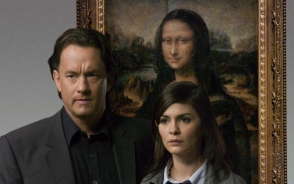
Filmmakers casually giving the Catholic Church a swift kick in the shorts isn’t a new phenomena. There have been a few films that take swipes at the church like: Stigmata, The Da Vinci Code, The Order, Priest, Constantine, Jeffrey, Hudson Hawk, Dogma, Saving Silverman, The Golden Compass, The Name of the Rose, Primal Fear, The Pope Must Die, Hail Mary, The Devils, The Magdalene Sisters, Chocolat, The Agnes of God, The Boys of St. Vincent, Mystic River, Casanova…It goes on from there. Add your titles to the list.

Why is the Catholic Church so often the focus of attention rather than other Christians? First because the Church has a broad, international reach, and it has a deep influence on every culture it touches. The impact of the church as a worldwide organization is undeniable. This wide reach didn’t happen overnight. The Church has a long history that goes back to Biblical times. You cannot tell the story of mankind without talking a great deal about the workings of the Church. It is the backbone of the Christian faith.

Another reason Catholicism is so readily used as the entertainment industry’s personal diaper is because Catholics are so dang easy to spot. Priests, nuns, cardinals and Popes all wear easily identifiable uniforms. No one has ever said, "Hey, I was down at Chuck E. Cheese and thought I saw the Pope, it turned out it was Jerry." Even if Jerry likes to wander around with a large bejeweled hat, the Pope is the Pope. Think of it, if you’re a filmmaker and have a point to make about Christianity, what do you do? How do you readily show a Baptist preacher? You'd have to show a guy with big hair and a bad sweater. Even if you do this, you'll still have to point out he’s a Christian and not just some poorly dressed guy with a lot of opinions. For the sake of economy, it would be easier to just slap a collar on the guy and give him an Irish last name.

When filmmakers take shots at Christians in general it always causes an uproar. When the target of the insult is Catholic, the cries of foul often are quieter. Sure, with groups like The Catholic League and the well organized online bloggers few insults go unanswered. For non-Catholics the attacks are usually treated as someone else's problem. If a Christian sees a cheap shot at a priest or a story centering on the Church's misdeeds (both imagined and real) and that Christian isn't troubled, there's a problem. The truth be told, all Christians should react strongly when any of our brothers and sisters - even those we disagree with - are maligned. The fact is that when filmmakers attack the Catholic faith more times than not their real intent is to attack ALL Christians from Catholic, to Lutheran and Baptist to everyone in between. Religion in general is the target, not just one branch of it. If you look at films that specifically focus on the Catholic faith such as Elizabeth: The Golden Age, or The Golden Compass study what they are really saying. They're usually not just attacking the Catholic religion, they're attacking all religion. The following of Christ is the issue. If one can injure Christians and dismantle our collective faith, the vacuum that is created can be filled with a secular belief system. When actor Ian McKellen stated on the Today show “I've often thought the Bible should have a disclaimer in the front saying this is fiction.” he speaks for a large number of people in the entertainment industry. Should it come as any surprise that McKellen, a proud hater of the Christian faith, has had ample opportunity to star in a number of films that are openly hostile to God (The Da Vinci Code, The Golden Compass, For the Love of God)? Those who loathe Christ and his teachings have a voice and they use it freely with the support of the film industry. Do not fool yourself, those willing to tear the Catholic Church down do not usually trouble themselves with the distinction in theology between the Pope and Billy Graham. When they throw these cinematic eggs at the Vatican they are meant to splatter on us all.

Pro-Life Film "The Human Experience" Promotes Consistent Respect for Human Life

An excellent review by Colin Mason

cross-post from The World...IMHO

I'm sitting at a worn desk in the headquarters of Grassroots Films in Brooklyn, NY. Humming Macs surround me as the company dog, a sand-colored mutt named Daisy, wanders aimlessly around my feet. Across the desk, Michael Campo is describing the experience of visiting a leper colony in Ghana.

"At first I was a little afraid, because I didn't know what to expect," he reminisces. "But all that fear was gone in five or ten minutes . . . they found such great joy and happiness together."

Campo, 28, co-stars in Grassroots Films' latest project, The Human Experience.

Fast-paced and modern, The Human Experience is a you-are-there documentary that claims to offer an unprecedented look at the human condition. After being thoroughly excited by the trailer (available at www.grassrootsfilms.com), I had the pleasure of being invited to screen this film in Brooklyn, as well as speak to all of the major players at Grassroots Films.

Simply speaking, I was deeply impressed by The Human Experience. It is possibly the most truly pro-life film I have ever seen.

Many pro-life films present the cause of life in a compelling way. Others attempt to show the consequences of a disrespect for life, by shocking or horrifying the viewer.

This film does neither. Instead, it moves beyond the ever-present politics of our day to something much more fundamental, closer to the issue.

The Human Experience aims to truly portray the human person, not as an issue or a political cause, but simply as “a breathtaking reality; a new, unrepeatable, unprecedented adventure.”

In the words of Chuck Kinnane, the film’s director, “the whole idea was to show people in some pretty dire situations, but they're making the best of it and they're still finding a way to be happy.”

The rest of the review here


Saturday, March 22, 2008

Book: The Signs of the timeWhen I first received The Signs of the Times "Understanding the Church since Vatican II by Fr. Richard W. Gilsdorf I wasn't much enthused. I thought "Oh great a 500 plus page book from someone I hadn't heard of and it is probably a crank complaining about Vatican II. " A chapter into the book thought I was spending any of my spare time racing through this book and finished it in relatively short order. I am quite thankful to have been introduced to the writings of Fr. Gilsdorf who passed away in 2005.

This book is a compilation of a life's writing from a former seminary professor, parish priest, and scripture scholar. The books main title comes from a series of columns he wrote for The Compass, the newspaper of the Diocese of Green Bay. The book contains these columns along with a wealth of his other writings that were published in places like Homiletic & Pastoral Review and the The Wanderer. Also included were various speeches he gave at conferences along with several book reviews. The book is edited by Patrick F. Beno who took on the task from Fr. Gilsdorf to take his published as well as unpublished writings to be made into a book for publication. The editor has provided copious footnotes to give the reader context and background information on persons and events describes as well as translations for Latin phrases used throughout.

The "Signs of the Times" columns were written during the Pontificate of Paul VI and largely address the errors that were being promulgated in the aftermath of Vatican II. Father describes himself as a "Vatican II liberal" where liberal is meant in the older and truer sense of the word. He fully supports the Council and the documents of the Council and it is the dissent and the "spirit of Vatican II" that he sets himself in opposition to. One phrase used a couple of times in his writings is that he is "As liberal as the Pope is liberal and as conservative as the Pope is conservative." I think this is a great definition and much better than the left/right descriptions so often bandied about that contain so little clarity.

As a convert and someone that often writes on dissent within the Church I found it quite interesting to see a history of some of the errors that are now quite familiar and how they developed in the first place. Father's writings often include the history of how certain theology and practices entered the Church in the first place. Practices like no confession before First Communion, Communal penance services without integral sacramental communion, downplaying of devotional practices, and the loss of Eucharistic piety. He details these movements and the lack of response to these errors by the large majority of diocese. As a priest who lived during these times and saw first hand these practices he has great insights into the reasons for these developments, but most of all great insights into the error of these practices and the harm they cause.

What I really enjoyed about Father's writings that even though there were on contentious subjects he writes with great charity and sometimes great humor. At multiple points in the book he will write something that made me laugh out loud such as when he described the "Holy Office of Greeley" or when he writes about a priest-lecturer who had found "a fertile crop of itching ears." Another example is:

"One of the abused words is 'relevance.' It nauseates me even to type the blasted word. Where is the emesis basin?"

A thought I totally concur with.

One of the best aspects of Fr. Gilsdorf writings is that he never lets bitterness creep in or to show frustration at the lack of response to dissent and liturgical abuses. He never falls into name calling and while he has severe disagreements with the thoughts of several people addressed in the book, his criticisms are always pointed to the subject of the disagreement itself. He was not the type to just whine and complain, but to respond with thoughtful commentary and to take action where he could. I found reading this book that he was the founder and first president of the excellent Confraternity of Catholic Clergy which continues to do great work and is totally faithful to the Magisterium of the Catholic Church.

One of my favorite pieces in the book was a short column that appeared in his parish bulletin called "A little corner of Heaven" It is quite touching his reflection of his small parish Church and the baptisms, marriages, and funerals that took place there. His great love for his parish shines through. The editor of the book notes that because of Fr. Gildorf's forthright orthodoxy he was likely relegated to this parish in a town of of only 550 persons where his influence would be minimal and where he served for the large majority of his life.

The book though is chock full of great writing and some influential pieces that evoked a lot of support. One of these excellent pieces is "The Pirates of Penance" (I just love that title) on the bad times that the great sacrament of penance has fallen on and the theology that lead to the downplaying of confession. No doubt the downplaying of sin is the error that lead to this. He gave me lots to think about from this essay and several others that addressed this sacrament and will certainly lead me to post on this in the future. Another great piece is The plight of the papist priest" which at the time was printed anonymously. This addresses the tension of being totally faithful to the Pope and the Magisterium of the Church while at the same time being faithful to your Bishop who is not faithful for the most part to either. This article was great encouragement to other "papist priests" throughout the world and ended up being printed in five different languages and the most requested piece at Homiletics & Pastoral Review.

Several chapters of the book also address the writings of scripture scholar Father Raymond Brown and how destructive some of his ideas were especially regarding the consciousness of Christ and how the "Ignorant Jesus" came to be taught in seminaries and every outlet of Catholic education. He shows multiple instances where Father Brown's writing totally conflict with Magisterial teaching and wonders just how it is that he became so influential and supported by so many bishops without an qualms. Since Fr. Gilsdorf is a scripture scholar himself he is able to ask some excellent questions and give some rebuttals to the some of Fr. Raymond Brown's writings. His scripture scholarship also is quite evident is several other pieces he writes on the papacy and the priesthood, and really throughout the book.

There were in fact so many great pieces in the book that I could easily turn this review into a summary of every chapter in the book since I just plain loved and enjoyed this book so much. Instead I would encourage everyone to pick up this book for their own enjoyment. For those already aware of Fr. Gilsdorf they will be rewarded with his other writings and for those such as myself for who this was a new introduction - the joy and education of reading his works.